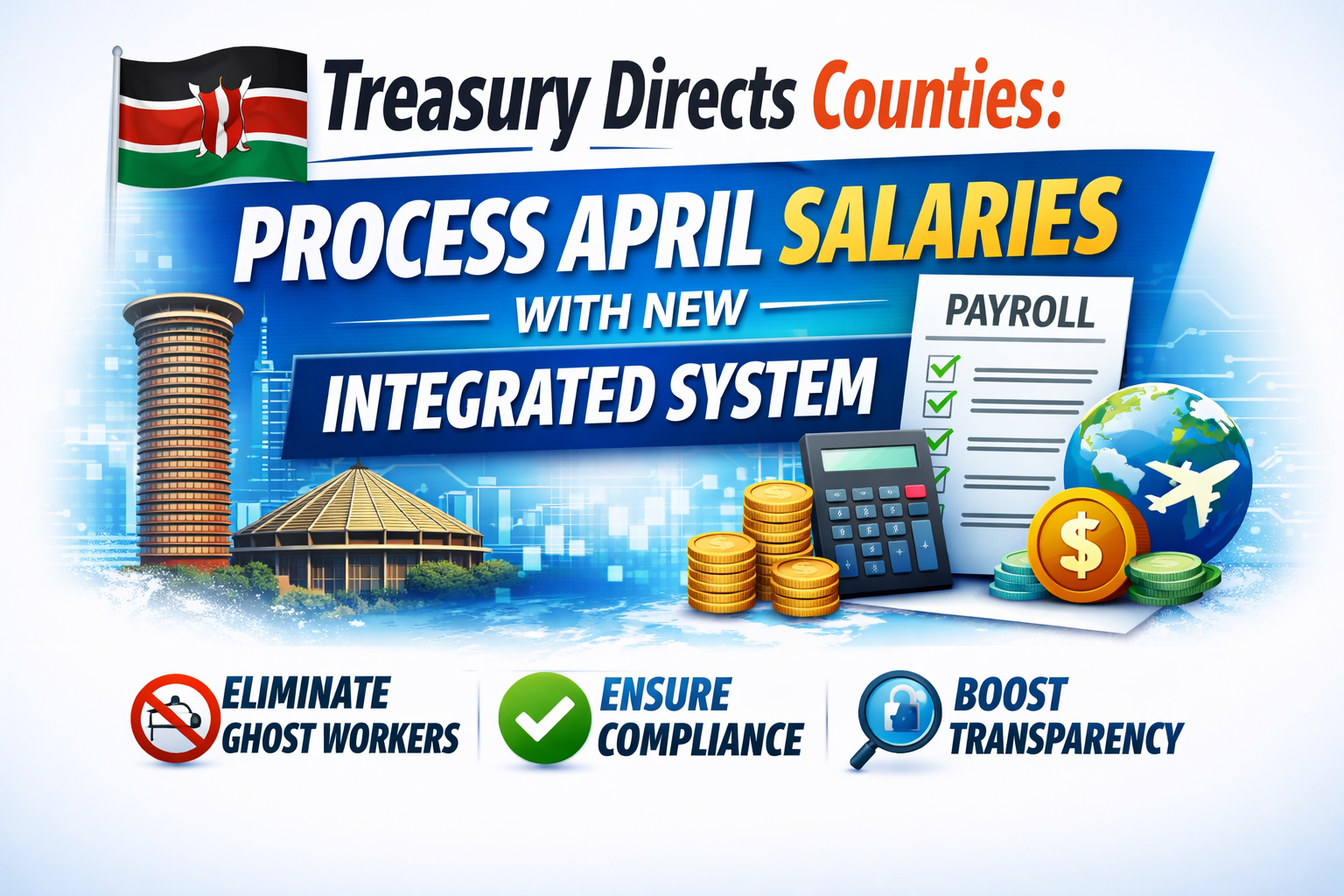
Treasury Directs Counties to Process April Salaries Using New Integrated System
Introduction
The Kenyan government has taken a major step toward improving transparency and accountability in public payroll systems. The National Treasury has now instructed all county governments to process their April salaries using a newly introduced integrated system.
This move is expected to address long-standing issues such as ghost workers, delayed statutory remittances, and inefficiencies in payroll management across counties.
At Divalinks Online Cyber Kenya Services, we break down what this means, why it matters, and how such systems reflect the growing importance of digital solutions in governance.
What Is the New Integrated Payroll System?
The newly introduced system combines multiple government processes into one unified platform. It links payroll processing with statutory deductions and financial management systems.
In simple terms:
👉 Salaries, deductions, and remittances are now handled in one synchronized system.
This includes:
- PAYE (Pay As You Earn)
- NSSF contributions
- SHA deductions
- Pension contributions
- NITA and other statutory obligations
The system integrates:
- HRIS (Human Resource Information System)
- IFMIS (Integrated Financial Management Information System)
This ensures that once salaries are processed, all deductions are automatically calculated and sent to the relevant government bodies.
Why the Government Introduced This System
The main goal is to eliminate inefficiencies and corruption in payroll systems.
1. Eliminating Ghost Workers
For years, counties have struggled with the issue of non-existent employees being paid salaries.
Recent estimates suggest billions of shillings have been lost due to ghost workers across multiple counties.
The new system ensures:
✔ Every employee is verified
✔ Payments are traceable
✔ Fake entries are eliminated
2. Ensuring Statutory Compliance
Many government agencies have been accused of deducting statutory payments but failing to remit them.
With this new system:
- Deductions are processed instantly
- Funds are sent directly to the relevant institutions
This improves:
✔ Accountability
✔ Compliance
✔ Financial discipline
3. Improving Transparency
By integrating payroll with financial systems, the government can now track:
- Who is being paid
- How much is paid
- Where deductions are going
This reduces:
❌ Fraud
❌ Mismanagement
❌ Hidden transactions
Mandatory Adoption by Counties
The Treasury has made it clear that all counties must adopt the system immediately.
👉 Any county that fails to comply will face serious consequences.
One key directive is:
- Salary payments must be processed through the integrated system
- Any request outside the system will not be approved
This means counties cannot access funds for salaries unless they use the new platform.
Impact on County Governments
This directive forces counties to align with national financial management standards.
Positive Impact
✔ Better payroll accuracy
✔ Reduced financial leakages
✔ Improved employee verification
Operational Challenges
Some counties may face:
- Transition difficulties
- System adaptation challenges
- Training needs for staff
However, in the long run, the benefits outweigh these challenges.
The Bigger Problem: Ghost Workers in Kenya
The issue of ghost workers is not new.
Audits in recent years have revealed shocking figures:
- Billions lost across counties
- Thousands of unverified employees
- Payroll systems lacking proper controls
Some counties have recorded:
- High percentages of unaccounted staff
- Employees without identification records
- Payments made outside official systems
These weaknesses created opportunities for misuse of public funds.
How the New System Solves This
The integrated system introduces:
1. Centralized Data
All employee information is stored and verified in one system.
2. Automated Processes
Manual payroll handling is minimized, reducing human interference.
3. Real-Time Tracking
Transactions can be monitored instantly.
4. Direct Remittance
Deductions go directly to government institutions without delays.
What This Means for the Future of Governance
This move signals a shift toward digital transformation in public service.
Kenya is increasingly adopting:
- Automated systems
- Integrated platforms
- Digital accountability tools
This is not just about payroll—it’s about:
👉 Building a transparent government system
What Businesses and Individuals Can Learn
At Divalinks, we see this as a powerful lesson:
1. Digital Systems Improve Efficiency
Whether in government or business, integrated systems reduce errors and improve operations.
2. Automation Reduces Risk
Manual processes often lead to:
- Mistakes
- Fraud
- Delays
Automation helps eliminate these risks.
3. Transparency Builds Trust
Systems that track and verify transactions increase confidence among stakeholders.
How Divalinks Supports Digital Transformation
At Divalinks Online Cyber Kenya Services, we help individuals and businesses embrace digital systems by offering:
- Website development
- Secure hosting solutions
- Email systems
- Cybersecurity setup
- Digital business guidance
We believe that adopting the right technology is key to growth and success in today’s digital world.
Final Thoughts
The directive by the National Treasury marks a significant step toward accountability and efficiency in Kenya’s public sector.
By enforcing the use of an integrated payroll system, the government is addressing critical issues that have affected counties for years.
While challenges may arise during implementation, the long-term benefits—transparency, efficiency, and accountability—make this a necessary and impactful move.
Call to Action
Are you looking to digitize your business or improve your systems?
👉 Partner with Divalinks today and take your operations to the next level.